Published on Sunday 11th January 2026

The 3CX Partner Program recognises companies who demonstrate proven competency in installing and supporting the 3CX phone system. As a certified 3CX Silver Partner, Trichromic has the expertise and accreditation to deliver reliable, professional telecommunications solutions for businesses of all sizes.
Why Choose a 3CX Partner?
Working with an accredited 3CX partner ensures your business receives:
- Expert installation and configuration tailored to your specific requirements
- Ongoing technical support from certified engineers who understand the platform inside and out
- Seamless migration from legacy systems with minimal disruption to your operations
- Best practice deployment following 3CX’s recommended standards
Continue reading →
Published on Wednesday 31st December 2025
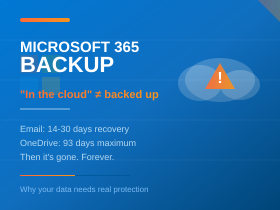
Why “It’s in the Cloud” Isn’t a Backup Strategy
“Don’t worry, it’s all in the cloud.”
We hear this constantly from business owners when we ask about their backup strategy for Microsoft 365. It’s one of the most dangerous assumptions in modern IT—and it’s costing businesses thousands of pounds in lost data, productivity, and recovery costs.
The truth is that Microsoft 365 is a platform, not a backup service. While Microsoft does an excellent job of keeping the platform running and protecting against infrastructure failures, they’re very clear about one thing: your data is your responsibility.
Understanding the Shared Responsibility Model
Microsoft operates under what they call the “Shared Responsibility Model”. In simple terms, this means Microsoft is responsible for keeping the platform available and secure, while you are responsible for your data.
Microsoft’s responsibility:
- Physical infrastructure and data centre security
- Platform uptime and availability
- Replication for disaster recovery of their systems
- Protection against hardware failure
Your responsibility:
- Protecting data from accidental deletion
- Protecting data from malicious deletion (including ransomware)
- Recovering data after account compromise
- Long-term data retention beyond Microsoft’s limits
- Meeting regulatory and compliance requirements
The Reality: Microsoft’s Retention Limits
Many business owners assume that deleted data can be recovered indefinitely. Here’s what Microsoft actually provides: Continue reading →
Published on Monday 29th December 2025
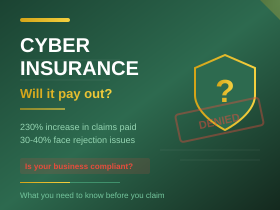
What UK Businesses Need to Know Before They Need to Claim
Many UK businesses now have cyber insurance. Far fewer have ever tested whether it would actually pay out when needed.
If you’ve got a policy sitting in a drawer somewhere, you might assume you’re covered if the worst happens. But cyber insurance isn’t like buildings insurance—you can’t just file a claim and expect a cheque. Insurers are increasingly scrutinising claims, and rejection rates are rising.
This article explains what cyber insurance actually covers, what insurers expect from you, and why so many claims are being denied. More importantly, it explains what you can do now—before an incident—to make sure your policy will work when you need it.
The Current Landscape
Cyber attacks on UK businesses are at record levels. In 2024, insurers paid out £197 million in cyber claims—a staggering 230% increase on the previous year. Malware and ransomware accounted for over half of all claims, and demand for cyber cover surged, with 17% more policies taken out compared to 2023.
High-profile attacks continue to make headlines. The 2025 ransomware attacks on Marks & Spencer and the Co-op resulted in estimated costs of £300 million and £120 million respectively. M&S has since made a £100 million claim on their cyber insurance policy.
But here’s the uncomfortable truth: a significant proportion of cyber insurance claims are rejected or only partially paid. Some industry estimates suggest as many as 30-40% of claims face issues—often because businesses couldn’t prove they had basic security measures in place.
What Does Cyber Insurance Actually Cover?
Cyber insurance policies vary significantly, but most offer a combination of first-party cover (your own losses) and third-party cover (claims against you). Here’s what a typical policy might include: Continue reading →
Published on Monday 22nd December 2025
The Scams That Trick Even the Smartest Employees
“Hi, I need you to process an urgent payment. I’m in a meeting so can’t call, but please action this immediately and confirm when done.”
If you received this email from your managing director, would you question it? What if it came from their actual email address—or one that looked almost identical?
This is the reality of modern email fraud. Gone are the days of obvious scams from foreign princes. Today’s attacks are sophisticated, targeted, and designed to exploit the trust and urgency that keeps businesses running smoothly.
The Scale of the Problem
Email-based attacks remain the number one method criminals use to target UK businesses. According to government statistics, over 80% of cyber attacks begin with a phishing email. For small and medium-sized businesses, the consequences can be devastating—not just financially, but in terms of reputation, client relationships, and business continuity.
We see attempted attacks on our clients regularly. The good news is that with the right awareness and systems in place, the vast majority can be stopped before any damage is done.
Understanding the Different Types of Attack
Not all email attacks are created equal. Understanding the different approaches helps you recognise them. Continue reading →
Published on Wednesday 17th December 2025
Understanding Who’s Responsible for What Under UK Data Protection Law
One of the most common questions we receive from clients relates to their data. “Why is Sarah’s mailbox full?” “What’s using all the space on our file server?” “Can you tell us what emails John has been deleting?”
These are perfectly reasonable questions, but the answers often surprise business owners. As your IT provider, we can tell you how much data exists and where it’s stored—but we can’t tell you what that data contains or make decisions about it. That’s not us being unhelpful; it’s data protection law working exactly as it should.
Understanding the difference between a data controller and a data processor is essential for every business owner. It clarifies responsibilities, prevents misunderstandings, and ensures your business remains compliant.
The Two Key Roles in Data Protection
UK data protection law defines two distinct roles when it comes to handling personal data. Most businesses will act as both at different times, but understanding which hat you’re wearing in each situation is crucial. Continue reading →
Published on Wednesday 10th December 2025
A Plain-English Guide for UK Business Owners
If you’ve ever felt confused by data protection terminology, you’re not alone. Many business owners we speak to aren’t sure whether they should be following “GDPR”, “UK GDPR”, or the “Data Protection Act”—or whether these are all different things entirely.
The good news is that once you understand the background, it all makes sense. This guide cuts through the jargon and explains exactly what UK businesses need to know about data protection law today.
A Brief History of Data Protection in the UK
Data protection law in the UK has evolved significantly over the past few decades. Understanding this history helps explain why we have the current framework. Continue reading →
Published on Monday 1st December 2025
Essential insights to help your business thrive in the digital age
As your trusted IT partner, we’ve compiled these essential facts to help you understand the technology landscape and make informed decisions for your business. Whether you’re looking to improve security, boost productivity, or plan for growth, these insights are relevant to businesses of all sizes and sectors across the UK.
- Cyber attacks cost UK SMEs an average of £8,460 per incident
According to government research, small businesses are increasingly targeted by cybercriminals. Basic security measures like multi-factor authentication and regular software updates can prevent the majority of attacks—often at minimal cost.
- 43% of cyber attacks specifically target small businesses
Smaller organisations are often seen as easier targets due to less sophisticated security infrastructure. A managed security service can provide enterprise-grade protection at SME-friendly prices. Continue reading →
Published on Saturday 1st November 2025

Merry Christmas from all of us at Trichromic! We would like to take the opportunity to thank you for your business in 2025 and we wish you a very Happy New Year.
Our telephone help desk will be closed from 13:00 on Wednesday the 24th December and will re-open at 09:00 on Monday the 5th of January 2025.
When open, our help desk can be contacted on 020-3327-0310 (option 1).
Those companies with a fully managed service contract should email or leave a voicemail on our help desk during the holiday season and we’ll respond as soon as possible.
The Trichromic Sapphire Cloud services (CloudDESKTOP, CloudEXCHANGE, etc) will be continually operating and monitored during the break and we have no current plans for any periods of scheduled maintenance.
Published on Tuesday 4th March 2025
As your trusted IT partner, we understand the unique challenges that small and medium-sized enterprises in the UK face. Microsoft has announced that Windows 10 will reach its end of support on 14th October 2025—a change that requires your attention now.
What This Means for Your SME
When Windows 10 support ends, your business will no longer receive:
– Critical security updates and patches
– Technical support from Microsoft
– Bug fixes for emerging issues
– Protection against new cyber threats
For SMEs already juggling multiple priorities with limited IT resources, this presents a significant risk to your operations and data security.
Why UK SMEs Should Prioritise Windows 11 Upgrade
Practical Security Benefits for Your Business
Windows 11’s enhanced security features are particularly valuable for UK SMEs, which are increasingly targeted by cybercriminals. Recent government statistics from 2022 show that 39% of UK small businesses reported cyber attacks that year, with an average cost of £4,200 per incident.
Continue reading →
Published on Sunday 5th January 2025
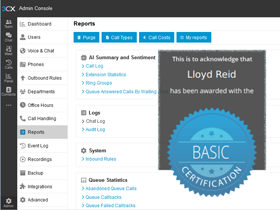
With the launch of V20, 3CX now offers multi-tenancy and department-specific configurations, significantly enhancing its suitability for larger organizations. Department managers can now control settings like office hours for their teams, a feature previously unavailable. Trichromic has demonstrated its commitment to mastering this new version, with staff completing basic, intermediate, and advanced training, and Lloyd Reid achieving basic certification.
For more information on how Trichromic LLP can support your telephony needs, contact us today by calling 02033270310.