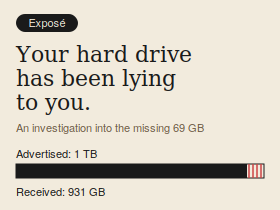
A humorous explainer on bits, bytes, storage, and the strange unit system that still confuses modern computing.
Our technology correspondent descends into the microscopic society living inside your laptop and returns with troubling news.
You may not be aware of this, but at this very moment there is a bustling society of microscopic workers living inside your laptop, your phone, and that suspiciously warm router in the hallway. They have a rigid class system. They have internal squabbles that were settled by committees decades ago and have never been revisited. And they are, almost without exception, much smaller than you’d think.
Allow me to introduce them.
The Bit: A Humble Beginning
At the bottom of the digital food chain lives the bit – the smallest employee in computing, paid in either a 0 or a 1 and nothing in between. Bits have exactly two moods and have shown no interest in developing a third. They have been asked, repeatedly, over the course of seventy-plus years, whether they might like to try being a 2. They have declined every time.
A single bit is, frankly, useless on its own. It can tell you whether the light is on or off, and that’s about it. This is why bits are never seen alone in polite society. They travel in packs.
The Nibble: A Unit Nobody Takes Seriously
Four bits form a nibble. Yes, really. Someone in the 1950s decided that if eight bits was a byte, then four bits should be a nibble, because computer scientists have always believed the surest route to professional respect is whimsy. Nibbles are mostly discussed by people who enjoy hexadecimal, a quiet but intense minority.
The Byte: The Working Class Hero
Eight bits make a byte, and the byte is where things actually get done. A byte can hold a letter of the alphabet, a small number, or one shade of red in a photograph. Every email you’ve ever sent, every cat video you’ve ever rewatched, every angry WhatsApp message you wrote at 1am and thankfully deleted – all of it assembled, byte by byte, in their millions.
Bytes are the honest, blue-collar workers of the digital world. They show up. They do the job. They ask for nothing in return except to be measured in reasonable multiples.
Which brings us to the scandal.
The Great Hard Drive Heist
Here is a fact that will make you want to speak to a solicitor.
When a hard drive manufacturer advertises a “1 TB” drive, they mean one trillion bytes – 1,000,000,000,000 of them. Clean. Decimal. Straightforward.
But your computer does not count in decimal. Your computer counts in powers of two, because silicon doesn’t do decimal; it only knows yes and no. When Windows looks at that same drive, it measures things in chunks of 1,024 and comes up with roughly 931 GB.
Nobody stole the missing 69 gigabytes. They were never there. They were a marketing construct. Drive manufacturers have used the smaller definition since the dawn of time because it makes the number on the box bigger, and bigger numbers sell better than honest ones.
There is, technically, a proper unit for the larger computer-ish version – the “gibibyte”, or GiB – created by an international standards committee in 1998 specifically to solve this problem. It never caught on because it sounds like a small woodland mammal and requires humans to learn new prefixes, which we collectively refuse to do.
This is the single most common reason people believe their computer is broken when it isn’t.
The Word: A Unit Having an Identity Crisis
Above the byte lives the word, and the word is having a bit of a time.
A word is, in principle, the size of a data chunk the processor can handle in one go. On a modern machine that’s 64 bits, or 8 bytes. Simple enough.
Except Intel baked “WORD” into the x86 architecture in 1978 as 16 bits, and the industry decided to preserve it like Victorian taxidermy. So we now have “WORD” (16 bits), “DWORD” (32 bits – the D is for double), and “QWORD” (64 bits, quad), all frozen in amber since the Thatcher era. If you’ve ever edited the Windows Registry and noticed something called REG_DWORD, congratulations: you were touching a fossil.
The Units of War: Network vs. Storage
One last matter, because it causes more arguments with internet providers than almost any other topic in technology.
Internet speeds are quoted in bits per second: Mbps, Gbps, and so on. File sizes are quoted in bytes: MB, GB. There are eight bits in a byte.
So if your provider sold you a gigabit-per-second connection and your download manager reports it running flat-out at 125 megabytes per second – that is not a swindle. That is the maths working perfectly. One gigabit, divided by eight. Nobody is stealing anything. Probably.
In Conclusion
The digital class system marches on, funded by your clicks and preserved by committee inertia. Your computer is, at this very moment, moving trillions of bits around at close to the speed of light, largely so you can look up whether the actor from that show was also in the other show.
The troubling news? This entire rigid, byzantine hierarchy – with its marketing sleight-of-hand, its fossilized terminology, and its units that sound like woodland creatures – is never changing. We are stuck with it. Forever.
Somewhere in there, a nibble is having its moment.
Let it. Just don’t expect it to split the terabyte evenly.